
Building a strong website is only one part of an effective search engine optimization strategy. Even excellent content can struggle to gain visibility when a website has limited authority, few referring domains, or a weak backlink profile. This is why marketers, agencies, publishers, and business owners continually search for high DA websites that can provide opportunities for developing stronger and more credible backlink profiles.
Domain Authority, commonly abbreviated as DA, is a third-party SEO metric associated with Moz. It is designed to estimate the relative ranking strength of a domain based largely on its link profile. It should not, however, be confused with an official Google ranking score. Google has stated that it does not use a metric called “Domain Authority” as a direct ranking factor. M
That distinction is important. The goal should not simply be to collect links from websites displaying impressive DA numbers. Instead, successful link building focuses on relevant, trustworthy, editorially useful websites that can contribute to a natural and diverse backlink profile.
This is where a curated collection such as Backlink2 Winner Selection can be useful. Its collection of high-ranking domains gives SEO professionals a starting point for discovering potential websites for outreach, publishing, partnerships, content promotion, and other legitimate link-building opportunities.
Backlink2 resource: https://www.backlink2.com/high-da-websites/
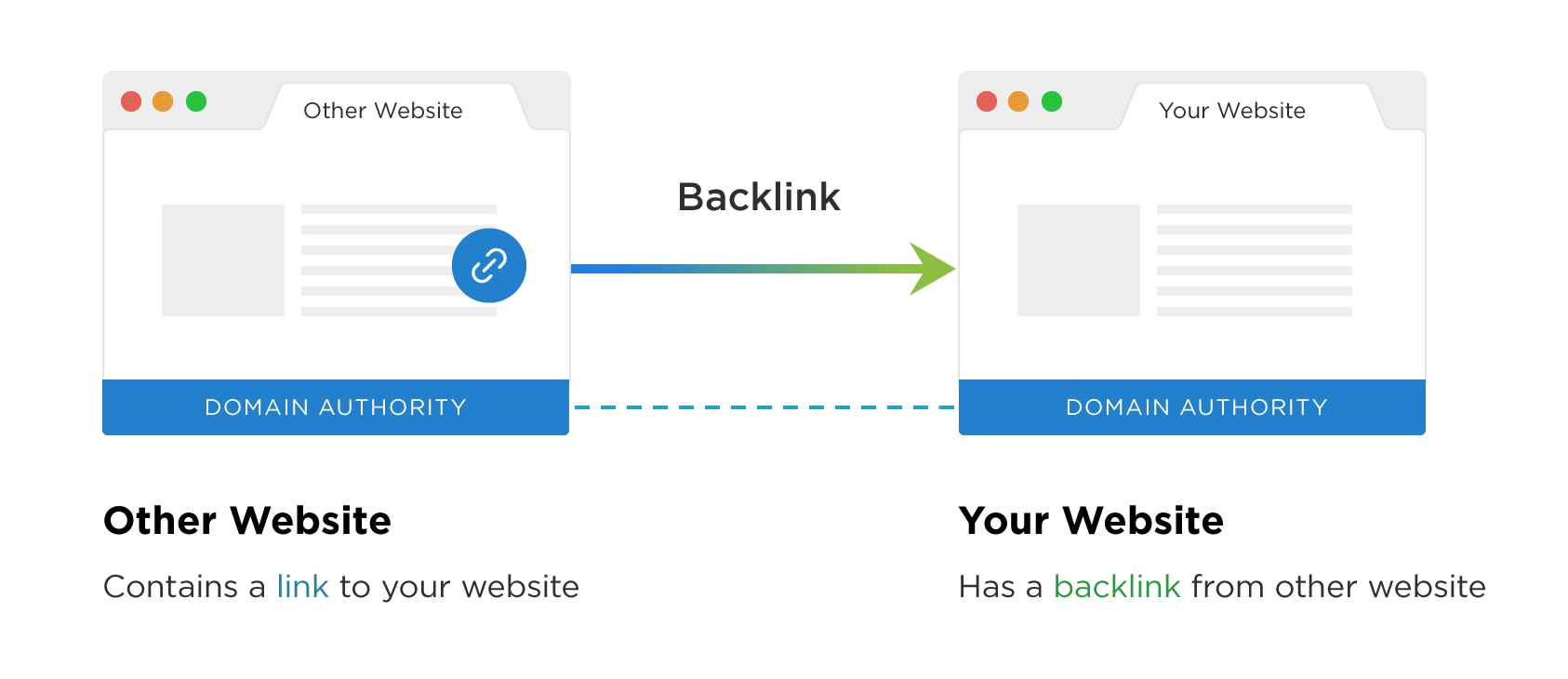


Illustrative images showing the relationship between backlinks, authoritative domains, and SEO.
What Are High DA Websites?
High DA websites are domains that have a comparatively strong Domain Authority score according to Moz or a similar third-party SEO platform. DA uses a 1–100 scale, and because the metric is relative and logarithmic, moving from an already-high score to an even higher score can require considerably more link strength than moving upward at the lower end.
DA is best understood as a comparative SEO metric, rather than a guarantee of search performance. A website with a DA of 70 is not automatically better for every backlink opportunity than a website with a DA of 45.
For example, imagine a technology company trying to rank an article about cloud security. A highly authoritative general-interest website may have an impressive score, but a respected cybersecurity publication with a lower overall authority could potentially provide a more relevant and useful backlink opportunity.
This is why experienced SEO professionals consider multiple signals, including:
- Domain Authority or another authority metric
- Topical relevance
- Referring-domain quality
- Organic search traffic
- Editorial standards
- Content quality
- Link placement
- Existing outbound-link patterns
- Website reputation
- The quality of the specific page containing the link
Ahrefs similarly recommends looking beyond a site’s overall authority when evaluating backlink opportunities, including organic traffic, topical relevance, content quality, backlink quality, and the number of websites to which the domain links. H